 BetTennis
 Tennis Court Surfaces and Betting Strategy: Clay, Grass, and Hard Court Analysis
 Available in US
Surface matters in tennis betting more than almost anything else, yet it’s the variable recreational bettors consistently undervalue or ignore entirely. They see two top-20 players squaring off and assume the higher-ranked one should be favored by roughly the same amount regardless of whether they’re playing on clay in Monte Carlo or grass at Wimbledon. That’s not how tennis works, and it’s not how smart betting works either.
A player can be legitimately elite on one surface and borderline mediocre on another. Rafael Nadal’s fourteen French Open titles on clay weren’t luck or coincidence. He’s arguably the greatest clay court player in history. Put him on grass and he’s still excellent, but the gap between him and other top players shrinks dramatically. The surface fundamentally changes the game, and understanding these changes is non-negotiable if you’re serious about tennis betting.
This isn’t surface-level analysis where we tell you clay is slow and grass is fast. You already know that. We’re going deeper into how each surface affects playing styles, which player profiles thrive where, how to identify surface specialists who get mispriced by betting markets, and how to build actionable betting strategies around surface dynamics. The bettors making consistent money aren’t just handicapping players. They’re handicapping how specific players match up on specific surfaces against specific opponents. That’s where edges exist.
Clay Court Characteristics and Betting Implications
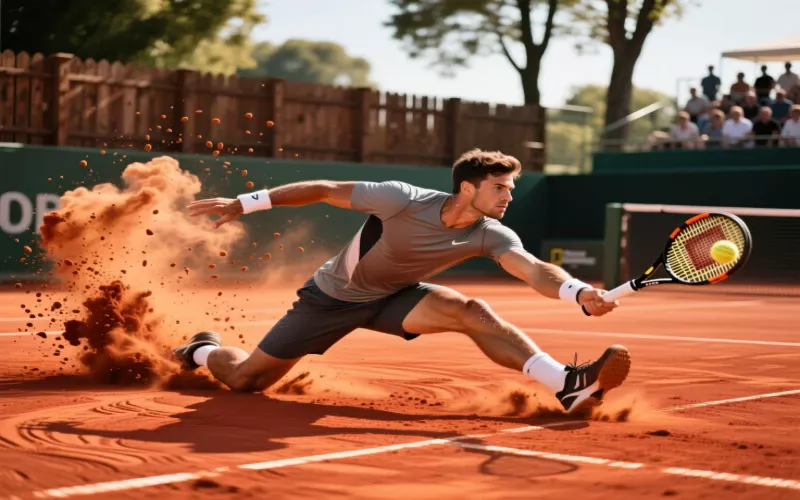
Clay courts slow everything down. The ball sits up higher after bouncing, moves through the air slower, and gives players more time to track down shots and construct points. Points on clay last longer than any other surface. Rallies extend because the slow bounce allows defensive players to retrieve balls that would be winners on faster courts. This fundamentally changes which skills matter most.
Defense becomes paramount on clay. Players need exceptional movement, stamina, and the patience to grind out points without forcing low-percentage shots. Aggressive ball-striking still matters, but you can’t just blast winners past opponents like on faster surfaces. You have to earn points through movement, consistency, and wearing down opponents physically and mentally.
Big serves lose much of their advantage on clay. The slow surface gives returners time to track down even powerful serves. A serve that’s an ace on grass becomes a returnable ball on clay. This means serve-and-volley players and pure power servers struggle on clay compared to their performance on other surfaces. The data backs this up consistently. Hold percentages drop for big servers on clay compared to grass or fast hard courts.
Spin becomes exponentially more effective on clay. Heavy topspin makes the ball kick up high after bouncing, forcing opponents to hit from shoulder height or above. This neutralizes flat hitters who want to take the ball early. Players like Nadal use heavy topspin as a primary weapon on clay, dragging opponents out of position and creating angles impossible on faster surfaces.
The physical demands of clay court tennis are brutal. Matches last longer. Points last longer. Players slide into shots rather than planting and hitting, which taxes different muscle groups. Fitness matters more on clay than any other surface. A player with superior conditioning will grind down a more talented but less fit opponent over the course of a three-hour match.
From a betting perspective, clay court specialists represent some of the most reliable value in tennis. The market knows surface matters, but it consistently underweights just how much better certain players perform on clay. A player might be ranked thirtieth in the world based on their overall results, but if twenty of their wins this year came on clay and only five came on other surfaces, they’re legitimately a top-fifteen clay court player. Betting markets often price them based on overall ranking rather than surface-specific ability.
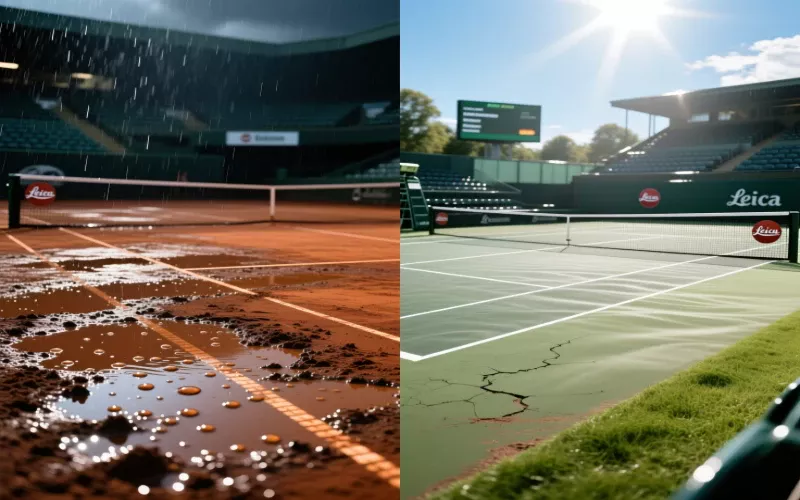
Weather impacts clay courts more than other surfaces. Rain doesn’t just delay matches. It changes the court itself. Wet clay becomes heavy and even slower, favoring grinders even more. Hot sun bakes clay and makes it play faster, which helps aggressive players slightly. Wind on clay is chaotic because the slower surface already gives players time to adjust to difficult conditions, but wind takes away that advantage. Strong wind on clay creates variance and upsets.
Clay court tournaments cluster on the calendar. The spring season from April through early June is clay court season, culminating in the French Open. Players who specialize on clay can string together multiple strong tournaments during this stretch. Conversely, players who hate clay suffer through two months of disappointing results before the surface changes.
Early-season clay results are tricky to interpret. When the tour first transitions from hard courts to clay in April, players need time to adjust. Some adapt quickly. Others take weeks to find their clay court game. The first clay tournament or two each year produces more upsets than normal because players are still adjusting. If you identify players who historically start slow on clay but peak by late May for Roland Garros, you can fade them early and back them later.
Transition periods off clay create similar opportunities. After two months grinding on clay, players need time to readjust when the tour moves to grass or back to hard courts. Clay specialists often struggle in their first tournament on a different surface because their timing is off and they’re still in clay court mode mentally. Fading clay specialists in their first grass court tournament of the year is a winning strategy more often than not.
Surface-specific head-to-head records matter enormously. If Player A is 3-0 against Player B overall but all three matches were on hard courts, that record means nothing when they meet on clay. Always break down head-to-head by surface. A player might own another player on clay while losing to them everywhere else.
Grass Court Dynamics and Strategic Betting
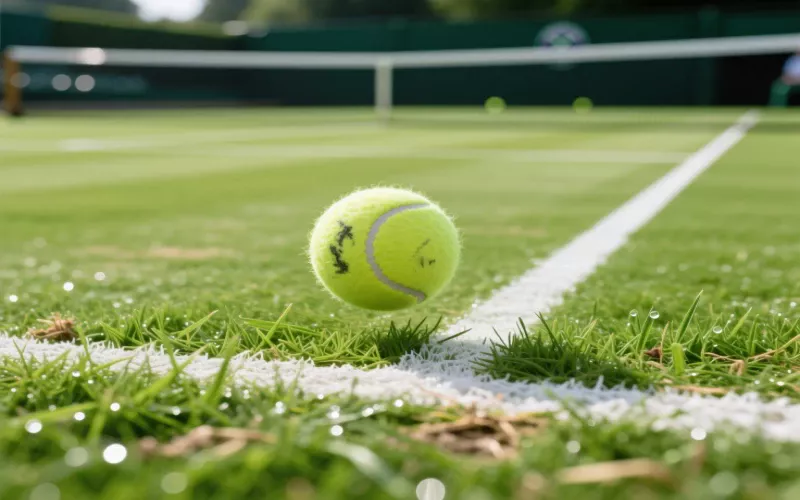
Grass courts are the opposite of clay in almost every meaningful way. The ball skids low, moves fast, and doesn’t kick up after bouncing. Points are short. Service holds dominate. Breaks of serve are precious commodities. This creates a completely different strategic landscape for both players and bettors.
Big servers thrive on grass like nowhere else. A fast serve on grass is nearly unreturnable because the ball stays low and the returner has minimal time to react. Players with big serves and solid volleys become legitimately dangerous on grass even if they’re mediocre on other surfaces. The data is stark. Serve hold percentages on grass exceed those on any other surface by significant margins.
Grass court tennis rewards aggression and punishes passive play. You can’t just retrieve balls and grind on grass because the low bounce and fast pace favor the attacker. Players need to take balls early, hit through opponents, and finish points at the net when possible. Defensive specialists who thrive on clay often look lost on grass.
The serve-and-volley style, mostly extinct on modern hard courts and clay, still appears occasionally on grass. Players serve and immediately rush the net, using the fast surface and low bounce to their advantage. This style is high-variance but effective on grass against opponents uncomfortable at net or poor at passing shots.
Grass court season is painfully short. The entire grass swing lasts maybe three weeks, leading into Wimbledon. This means players get minimal grass court practice compared to the months they spend on clay and hard courts. The lack of familiarity creates variance and upsets. A player ranked outside the top fifty but comfortable on grass can absolutely upset a top-ten player who struggles with the surface.
Wimbledon is the only major tournament on grass, which gives it unique importance. It’s also the oldest and most prestigious tournament, carrying psychological weight. Players who grew up dreaming of winning Wimbledon bring extra motivation. Others find the pressure suffocating. These intangible factors matter more at Wimbledon than almost any other tournament.
Grass courts deteriorate during tournaments in ways other surfaces don’t. The grass literally wears down, creating brown patches and uneven bounces by the second week. Early rounds play on pristine grass. Later rounds deal with worn courts that become unpredictable. This benefits experienced players who’ve navigated Wimbledon before and know how to adjust.
From a betting perspective, grass court specialists offer tremendous value because the market systematically underprices them. A player might be ranked fortieth but has made the Wimbledon quarterfinals twice. They’re legitimately a top-twenty grass court player, but their odds reflect their overall ranking. This is free money if you’re paying attention to surface-specific performance.
Transition onto grass creates even more opportunities. The tour moves from clay to grass with essentially no preparation. Players go from slow, high-bouncing clay to fast, low-bouncing grass in the span of a week. The adjustment is jarring. Early grass court tournaments like Queen’s Club and Halle produce chaotic results because everyone is still finding their grass court legs. Betting early grass tournaments requires completely different analysis than betting Wimbledon, where players have had time to adjust.
Serve statistics become the primary handicapping factor on grass. If Player A holds serve ninety percent of the time on grass and Player B holds serve seventy-five percent, Player A has a massive edge even if Player B is higher ranked overall. Conversely, if Player A is a great returner with strong break point conversion rates, they can steal breaks even from big servers and flip matches.
Weather at Wimbledon is notoriously unpredictable. Rain delays are common. When play resumes, the grass is slightly damp and even faster than normal. These conditions favor servers even more. Monitoring weather forecasts and understanding how damp grass affects play creates betting edges that most recreational bettors ignore.
Left-handed players have a specific advantage on grass. The serve angles work differently for lefties, and most players spend their careers primarily facing right-handed opponents. On grass where serves dominate, facing an unfamiliar serving pattern creates real disadvantages. Check any player’s record against left-handed opponents on grass. Some players have terrible splits because they can’t handle the angles.
Hard Court Analysis and Versatility
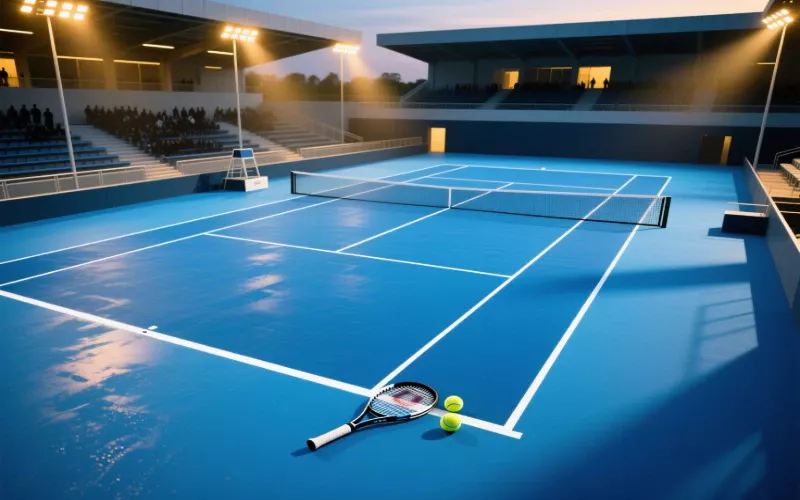
Hard courts are the default surface in professional tennis. The majority of the tour calendar plays on hard courts, from the Australian Open in January through the US Open in August and September, plus most Masters 1000 events and the year-end ATP Finals. This makes hard court performance the baseline for evaluating players.
The challenge with hard courts is they’re not monolithic. Hard courts vary significantly in speed depending on composition, climate, and altitude. Some hard courts play almost as fast as grass. Others play nearly as slow as clay. This range means “hard court player” doesn’t mean much without specifying which type of hard court.
The Australian Open hard courts historically played fast. The ball stayed low, serves were effective, and aggressive players had advantages. Recent years have seen the courts slow down slightly as tournament organizers try to create longer, more entertaining rallies. This shift affects which players perform well there.
US Open hard courts at Flushing Meadows play medium-fast with significant weather factors. Late summer heat and humidity in New York make conditions heavy. Night sessions feel different from day sessions. Wind swirls through the stadium affecting serves and groundstrokes. These variable conditions create more upsets and variance than people expect.
Indian Wells and Miami, the two American Masters 1000 events, play quite differently despite both using hard courts. Indian Wells in the California desert has dry, fast conditions favoring big hitters. Miami’s humidity slows things down and creates heavier conditions favoring consistent players. If you’re not accounting for these venue-specific characteristics, you’re missing significant edges.
Indoor hard courts play faster than outdoor hard courts because there’s no wind, no sun, and climate control keeps conditions consistent. The year-end ATP Finals are played indoors, favoring aggressive players and big servers. Indoor conditions eliminate many variables, making matches more predictable based on pure skill matchup.
Hard court specialists don’t exist the way clay court or grass court specialists do. Instead, you have all-court players who perform well on hard courts because hard courts reward versatility. These players have no glaring weaknesses. They serve adequately, return adequately, move adequately. They’re not exceptional at any one thing but competent at everything.
From a betting perspective, hard courts require more nuanced analysis than other surfaces. You can’t just identify “hard court specialists” and back them blindly. Instead, you need to break down which type of hard court the match is on, whether it’s indoor or outdoor, what the weather conditions are, and how each player’s skill set matches the specific venue.
Transition periods matter less with hard courts because players spend so much time on them. Moving from clay to hard courts requires adjustment, but most players adapt quickly because hard courts are familiar. Moving from grass to hard courts is seamless for most players. The exception is late in the year when fatigue becomes a factor. By October and November, players who’ve been grinding all year show wear and tear.
Altitude creates a specific hard court variable that bettors consistently mishandle. Tournaments in high-altitude locations like Madrid or certain South American events see balls flying through the thinner air faster. This makes courts play quicker than expected and gives big servers even more advantage. First-time visitors to high-altitude tournaments often struggle while veterans who’ve played there before know what to expect.
Court speed changes throughout the day outdoors. Morning conditions might be cool and fast. Afternoon sun heats the court and slows it slightly. Evening conditions cool again and speed back up. These intra-day variations affect match texture and outcomes more than most bettors realize.
Building a Surface-Based Betting System
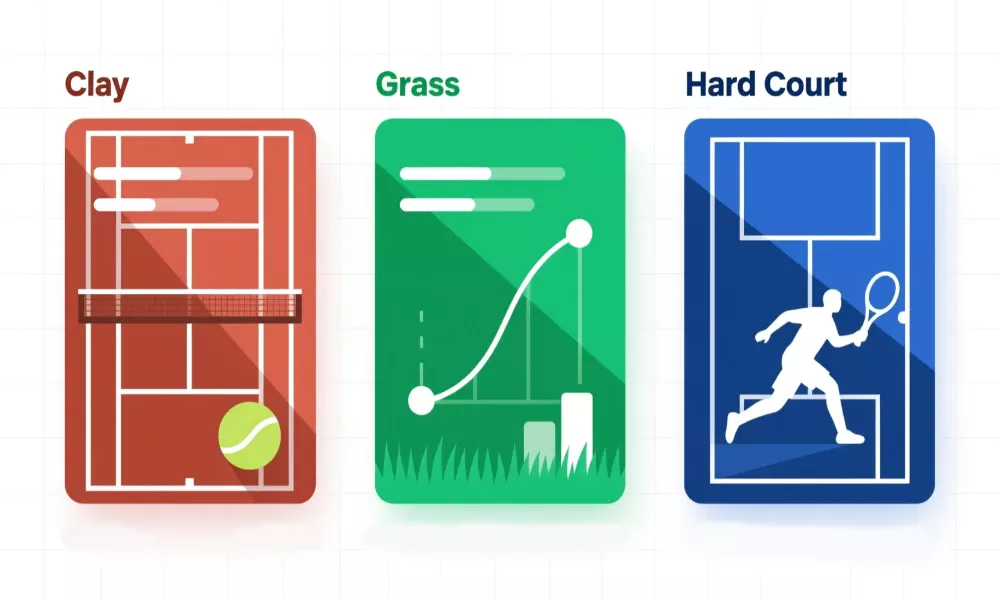
Surface specialization is real, measurable, and exploitable. The market knows surface matters but doesn’t price it sharply enough, especially for mid-tier players where less betting volume and attention creates softer lines. Building a systematic approach to surface-based betting starts with data collection.
Track every player’s performance by surface. Not just win-loss records but quality of competition faced, serve hold percentages, break point conversion rates, and average match duration. A player might have a 25-15 record on clay, but if those wins came against mostly unseeded opponents while their losses came against top-twenty players, they’re not a true clay specialist. They’re just beating up on weak players.
Compare surface-specific performance to overall performance. If a player is ranked fiftieth overall but their clay court record over the past year would rank them thirtieth, they’re undervalued on clay. If they’re ranked thirtieth but their grass court record would rank them sixtieth, they’re overvalued on grass. These gaps are where value exists.
Look for dramatic splits between surfaces. A player who’s 30-10 on clay and 15-20 on hard courts is a genuine clay specialist. When they play on clay, back them more aggressively than their overall ranking suggests. When they play on hard courts, fade them or stay away entirely. The market will price them somewhere between their clay prowess and hard court mediocrity, creating opportunities on both ends.
Pay attention to career trajectories. Young players often develop surface preferences as their games mature. A twenty-year-old might be competent on all surfaces but not exceptional anywhere. By twenty-four, they’ve often specialized, consciously or not, toward one surface. Identifying these specializations early lets you exploit them before the market fully adjusts.
Surface transitions are systematic opportunities. The first week on a new surface sees elevated upset rates. Players need time to adjust timing, footwork, and tactical approach. Fading favorites who historically struggle with surface transitions and backing underdogs who adapt quickly is a winning long-term strategy.
Create surface-specific bankroll allocation rules. Maybe you bet one unit normally but increase to 1.5 units when backing a clay specialist on clay against an opponent who struggles on clay. Conversely, reduce to 0.5 units or skip bets entirely when backing players off their preferred surface. This systematic scaling based on surface matchup improves long-term returns.
Weather forecasting becomes part of your pre-match process. Wind affects clay and outdoor hard courts significantly. Heat impacts all surfaces but matters most on clay where physical endurance is crucial. Rain delays affect grass dramatically. Checking weather forecasts and understanding how conditions interact with surfaces gives you edges that algorithm-based odds don’t capture quickly enough.
Venue-specific research pays dividends. Some clay court tournaments use lighter red clay, others use heavier Har-Tru. Some hard courts are laid thicker and play slower, others thinner and faster. Learning the characteristics of specific venues lets you refine your surface analysis beyond just “clay” or “hard court” to “Monte Carlo clay” versus “Madrid clay.”
Surface Matchups and Style Compatibility
Surface analysis doesn’t exist in isolation. It intersects with style matchups to create complex strategic situations. A defensive baseliner versus an aggressive ball-striker produces different results on clay than on grass, and those results differ again on hard courts.
Baseline grinders dominate clay but struggle on grass. These players want long rallies, consistent exchanges, and opportunities to chase down everything. Clay gives them exactly that. Grass doesn’t. When two baseline grinders meet on clay, bet the over on games because the match will be a marathon. When a baseline grinder faces an aggressive player on grass, the grinder is in serious trouble.
Big servers versus strong returners plays differently by surface. On grass, the big server has a massive edge because the returner gets minimal chances to break serve. On clay, the returner can grind out break opportunities through patience and consistency. On hard courts, it depends on court speed. Fast hard courts favor the server, slow hard courts favor the returner.
Left-handed players create specific matchup problems that surface affects. Lefty serves and groundstrokes come from unfamiliar angles. On grass where serves dominate, this is devastating. On clay where rallies extend, the advantage diminishes because returners have time to adjust. Check head-to-head records of right-handed players against lefties by surface. The splits are often dramatic.
Fitness-based matchups magnify on clay. If you’ve identified that Player A has superior conditioning to Player B, that edge matters more on clay than any other surface. Clay matches last longer and demand more physically. The fitter player grinds down the less fit player over three or four hours. On grass where matches are shorter and sharper, fitness matters less.
Mental toughness manifests differently by surface. Clay requires patience and resilience because you have to earn every point through consistency. Grass rewards aggressive risk-taking and quick decision-making. Players who thrive under pressure in tiebreakers have bigger edges on grass where more sets go to breakers. Players who stay mentally tough during four-hour matches have bigger edges on clay.
Exploiting Market Inefficiencies in Surface Pricing
Betting markets handle surface in predictable but imperfect ways. Understanding where the market gets it wrong creates sustainable edges. The biggest inefficiency is underweighting surface specialization for mid-tier players.
When top-ten players are involved, the market prices surface accurately. Everyone knows Nadal on clay is different from Nadal on grass. The odds reflect that. But when you get to players ranked twentieth through fiftieth, the market uses lazy shortcuts. It prices them primarily on overall ranking with insufficient adjustment for surface-specific performance.
Find players with dramatic surface splits who aren’t stars. A player ranked forty-fifth overall who’s essentially a top-twenty clay player gets priced like a generic forty-fifth-ranked player when on clay. That’s value. Conversely, that same player might be effectively sixtieth on grass but still gets priced closer to forty-fifth. That’s a fade.
Early-tournament pricing is softer than late-tournament pricing. The first few rounds of any tournament see the market using general models and algorithms. By the quarterfinals and semifinals, the market has incorporated actual performance and tightened odds. Exploit early rounds by doing surface-specific research the market hasn’t fully priced yet.
Lower-tier tournaments are less efficiently priced than majors and Masters 1000 events. An ATP 250 on clay in South America doesn’t get the same analytical attention as the French Open. The odds are softer. If you’ve done your homework on who performs well on South American clay specifically, you’ll find edges that don’t exist in more prominent tournaments.
Weather information moves slower than you’d expect. If you’re checking detailed weather forecasts and know wind will be a major factor in an outdoor clay court match, the odds might not fully reflect that yet. The market will adjust as match time approaches and more bettors check weather, but there’s a window where you can bet with information edge.
Public perception creates surface-based biases. Popular players get overbet regardless of surface. If a fan favorite is playing on their worst surface, the public still piles on, pushing odds in your favor on the opponent. Conversely, unsexy players who happen to be excellent on specific surfaces get underbet because nobody’s excited to back them.
Advanced Surface Strategy and Future Considerations
Surface analysis evolves as the game changes. Court speeds have been converging slowly over the past decade. Grass courts are slightly slower than they used to be. Clay courts at some venues are slightly faster. Hard courts vary wildly but generally trend toward medium speed. This homogenization means extreme specialists are rarer than they used to be.
The next generation of players grew up training primarily on hard courts because that’s where most tournaments are. They’re more versatile across surfaces but less specialized than previous generations who grew up exclusively on clay or grass in certain regions. This affects how we identify specialists. Modern specialists might only be ten or fifteen percent better on their preferred surface versus thirty percent better for previous generations.
Climate change is affecting outdoor tennis in measurable ways. Hotter temperatures at traditional venues, more frequent rain delays, and shifting weather patterns all impact how surfaces play. Tournaments that used to have predictable conditions now deal with more variance. This increases the importance of weather monitoring in your betting process.
Surface maintenance and technology continue advancing. New clay compositions, improved grass cultivation, and harder or softer hard court surfaces mean even within each category there’s more variation than ever. Staying current on how specific venues maintain and modify their courts gives you edges over bettors using outdated assumptions.
Indoor versus outdoor matters increasingly as more tournaments move indoors or add retractable roofs. A clay court indoors plays differently than outdoors because of climate control and no wind. Hard courts indoors are faster and more consistent than outdoors. Understanding these indoor/outdoor splits adds another layer to your surface analysis.
The holistic approach to surface-based betting combines all these factors. It’s not just knowing clay is slow and grass is fast. It’s understanding player profiles, style matchups, weather impacts, venue-specific characteristics, market inefficiencies, transition periods, and psychological factors. When you layer all these elements together, you build a comprehensive framework that identifies edges the market misses consistently. That’s how surface analysis transforms from basic knowledge into profitable betting strategy.
See also: bet-tennis – your tennis betting resource.
See also: Grand Slam Betting Guide – surface knowledge matters most at Grand Slams.
